
Hyundai Palisade (LX2): Fuel Delivery System / High Pressure Fuel Pump
Repair procedures
| Removal |
| 1. |
Release the residual pressure in fuel line.
(Refer to Fuel Delivery System - "Release Residual Pressure in Fuel
Line")
|
| 2. |
Switch "OFF" the ignition and disconnect the negative (-) battery terminal.
|
| 3. |
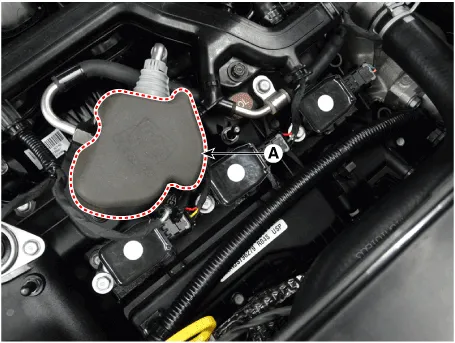
Remove the high pressure fuel pump foam (A).
|
| 4. |
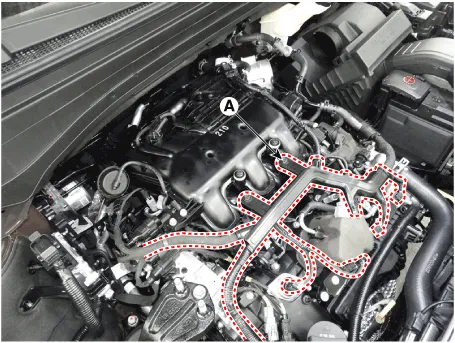
Remove the control wiring harness (A).
|
| 5. |
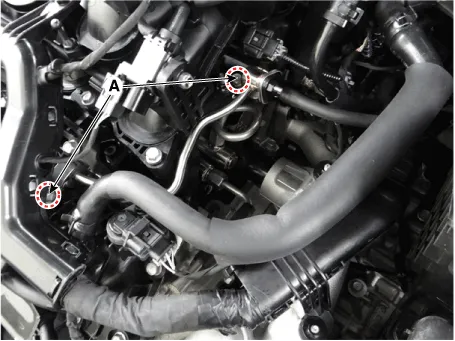
Remove the fuel line mounting bolts (A).
|
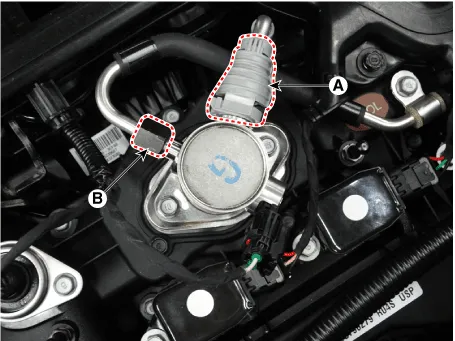
| 6. |
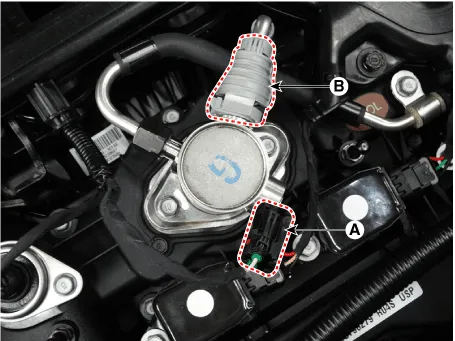
Disconnect the high pressure fuel control valve connector (A) and low
pressure fuel feed tube quick-connector (B).
|
| 7. |
Remove the high pressure fuel pipe.
(Refer to Fuel Delivery System - "Fuel Line")
|
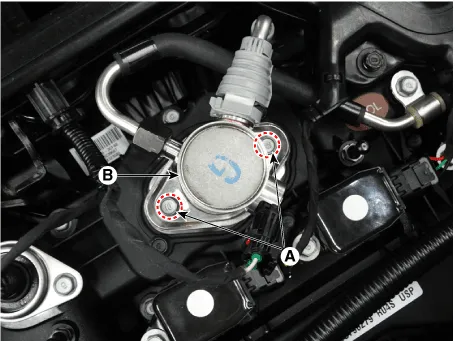
| 8. |
Remove the mounting bolts (A), and then remove the high pressure fuel
pump (B) from the cylinder head assembly.
|

| Installation |
|

|

|

|

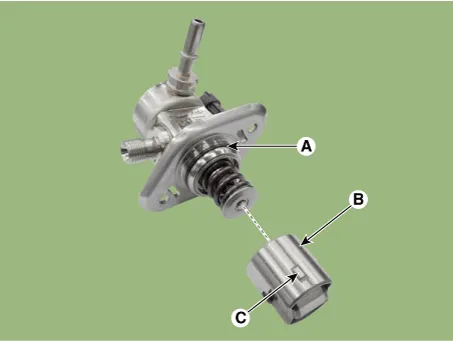
| 1. |
Install in the reverse order of removal.
|
Repair procedures Removal • When removing the high pressure fuel pump, high pressure fuel pipe, delivery pipe, and injector, injury may be caused by leakage of high pressure fuel.
Other information:
Hyundai Palisade (LX2) 2020-2026 Service Manual: Mode Control Actuator
Description and operation Description The mode control actuator is located at the heater unit. It adjusts the position of the mode door by operating the mode control actuator based on the signal of the A/C control unit. Pressing the mode select switch makes the mode control actuator shift in order of Vent → Bi-Level →
Hyundai Palisade (LX2) 2020-2026 Service Manual: Special service tools
Special Service Tools Tool Name / Number Illustration Description LKA Compensator (09890-3V100) Used for compensating front view camera unit Tolerance Compensation Plate for Surround View Monitoring (09957-CM100)
Categories
- Manuals Home
- Hyundai Palisade Owners Manual
- Hyundai Palisade Service Manual
- Components and components location
- Scheduled maintenance services
- Brake bleeding procedures
- New on site
- Most important about car
