
Hyundai Palisade (LX2): Rear Suspension System / Trailing Arm
Repair procedures
| Removal |
| 1. |
Loosen the wheel nuts slightly.
Raise the vehicle, and make sure it is securely supported.
|
| 2. |
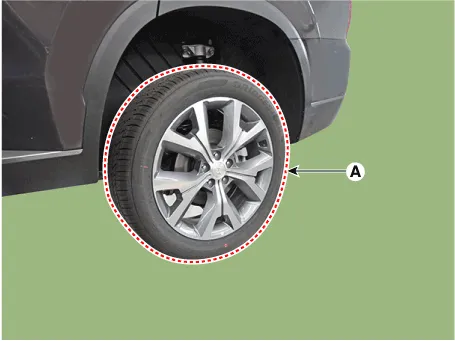
Remove the rear wheel and tire (A) from rear hub.
|

| 3. |
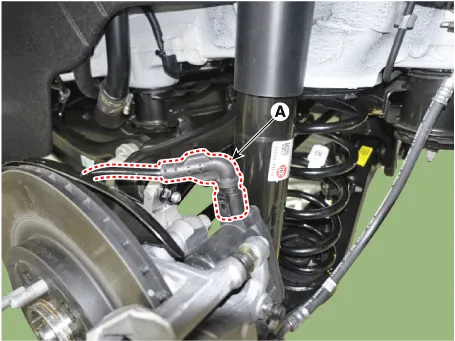
Disconnect the EPB connector (A).
|
| 4. |
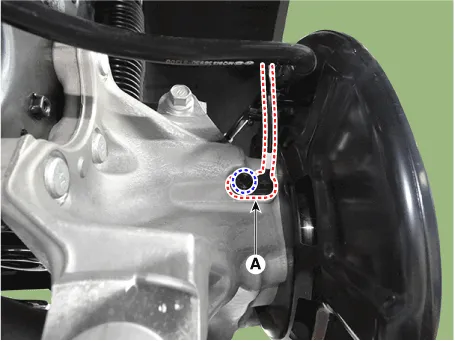
Loosen the bolt (A) and then remove the rear wheel speed sensor.
|
| 5. |
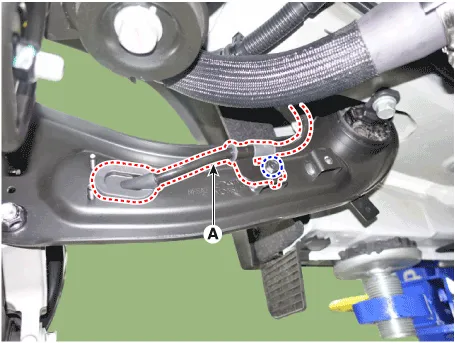
Loosen the bolt and then remove the rear wheel speed cable (A).
|
| 6. |
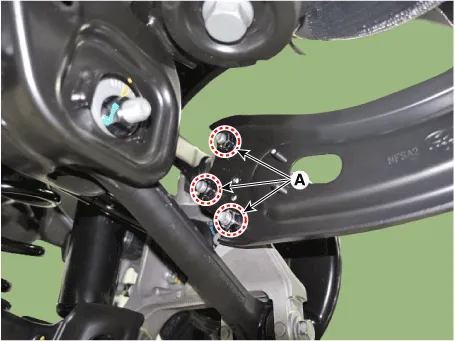
Loosen the nut (A) and then disconnect the trailing arm from the rear
axle.
|

| 7. |
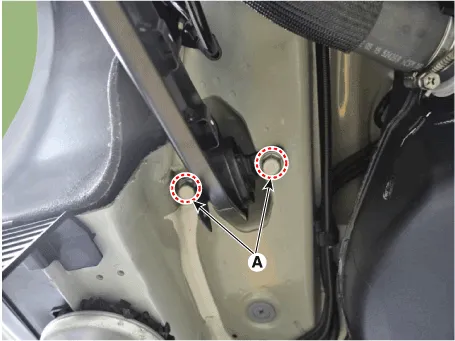
Loosen the bolt (A) and then remove the trailing arm.
|
| Inspection |
| 1. |
Check the bushing for wear and deterioration.
|
| 2. |
Check for all bolts and nuts.
|
| Installation |
| 1. |
Install in the reverse order of removal.
|
| 2. |
Check the alignment.
(Refer to Suspension System - "Alingment")
|
Repair procedures Removal 1. Loosen the wheel nuts slightly. Raise the vehicle, and make sure it is securely supported.
Repair procedures Removal 1. Loosen the wheel nuts slightly. Raise the vehicle, and make sure it is securely supported.
Other information:
Hyundai Palisade (LX2) 2020-2026 Service Manual: Compressor
Description and operation Description The compressor is the power unit of the A/C system. It is located on the side of engine block and driven by a V-belt of the engine. The compressor changes low pressure and low temperature refrigerant gas into high pressure and high temperature refrigerant gas.
Hyundai Palisade (LX2) 2020-2026 Service Manual: Schematic diagrams
Trouble Symptom Charts Component Parts and Function Outline Component part Function Cruise Control Switch Input the set speed and distance to the SCC ECU. Instrument Cluster Display various information inputted from SCC.
Categories
- Manuals Home
- Hyundai Palisade Owners Manual
- Hyundai Palisade Service Manual
- Repair procedures
- Engine Mechanical System
- Rain Sensor
- New on site
- Most important about car
